
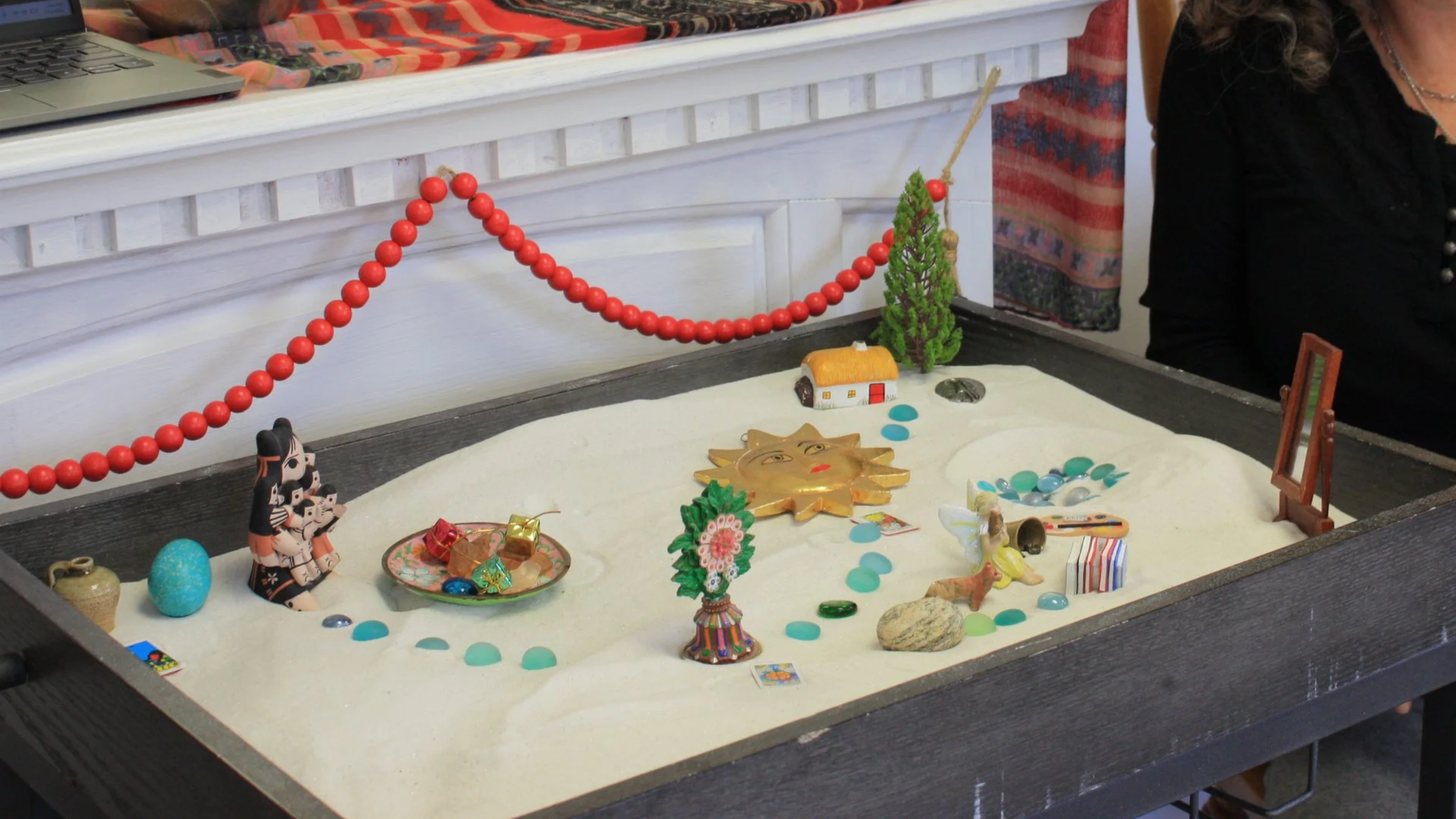
Trauma-Informed Sandplay
Certificate Program
The Summit sponsored TRAUMA-INFORMED Sandplay Certificate Program is open to mental health professionals and educators who want to understand the neuroscience of trauma as a framework for the use of Sandplay Therapy for the treatment of complex and developmental trauma.
When: Jan. 9 - Mar. 20, 2027
See schedule section below for details
TIME: 10am - 5pm
Eastern Time
LOCATION: Creative Arts Therapy Studio in Kingston, NY & Virtually-Live-Online
What You Will Learn
Discover the healing power of symbolic expression.
Expand your clinical practice with one of the most powerful nonverbal, trauma-informed approaches available today. This immersive 30-hour Trauma-Informed Sandplay Therapy Certificate Program combines neuroscience, expressive arts, person-centered practice, and experiential learning to help clinicians safely access and support healing beyond words.
Designed for mental health professionals, creative arts therapists, social workers, counselors, psychologists, educators, human service providers, and students, this hybrid certificate program provides a comprehensive foundation in Sandplay Therapy while offering practical skills you can immediately integrate into your work with children, adolescents, adults, families, and groups.
Grounded in the pioneering work of Dr. Margaret Lowenfeld, Jungian psychology, person-centered theory, and current trauma research, participants will explore how symbolic play creates safety, containment, emotional regulation, and resilience for clients recovering from complex, developmental, collective, and intergenerational trauma.
Unlike traditional talk therapy, Sandplay Therapy allows clients to communicate experiences that may be difficult—or impossible—to express verbally. Through the creation of symbolic worlds using miniature figures in a sand tray, clients gain access to unconscious material, inner strengths, personal narratives, and pathways toward healing in a safe and protected therapeutic environment.
Dr. Lucy Barbera
-
Attend in-person at the Creative Art Therapy Studio in Kingston, NY or attend virtually over Zoom. All sessions take place from 10:00 am - 5:00 pm Eastern Time, with a one hour lunch.
January 9
January 23
February 13
February 27
March 13
March 20 -
$1,197
Includes 30 hours certificate training & continuing education credits.
-
COUNSELORS & MFT
Expressive Therapies Summit has been approved by NBCC as an Approved Continuing Education Provider, ACEP No. 7486. Programs that do not qualify for NBCC credit are clearly identified. Expressive Therapies Summit is solely responsible for all aspects of the programs.
✢ California Marriage and Family Therapists, Social Workers, Educational Psychologists and Professional Counselors- As of July 1, 2017, the State of California /Board of Behavioral Sciences [BBS] amended its regulations for continuing education providers to include National Board for Certified Counselors (NBCC) as a "board-recognized approval agency." If you are licensed as a marriage and family therapist, social worker, educational psychologist or professional clinical counselor in California, NBCC Approved Continuing Education Providers are recognized by the BBS to fulfill continuing education requirements. As of July 1, 2017, required CE hours can be accumulated entirely through self-study and distance learning.
ART THERAPISTS
✢ According to the Art Therapy Credentials Board (ATCB), continuing education credits in art therapy and/or mental health earned through this event can be applied toward the continuing education requirement for maintaining the ATR-BC. It is the responsibility of the attendee to determine if a particular session fits within the ATCB content areas.ELIGIBLE CONTENT AREAS1. Psychological and Psychotherapeutic Theories and Practice 2. Art Therapy Assessment 3. Art Therapy Theory and Practice 4. Client Populations and Multicultural Competence 5. Art Therapy and Media 6. Professional Issues 7. Ethics For further information, click here.
NEW YORK STATE
SOCIAL WORKERS
Expressive Therapies Summit, SW CPE #0730 has received approval from the New York State Education Department's State Board for Social Work to offer continuing education to licensed social workers. The Department may subsequently notify the provider that a particular course or courses is/are not acceptable.
Instruction provided is to assist social workers in working with other professions; it does not authorize the social worker to engage in the practice of any other profession, except as allowed by the Education Law.
The following states will accept NY State SW credits. (click the state for reference)
Alabama, Connecticut, Georgia, Idaho, Illinois, Massachusetts, Michigan, Utah.
The following states may accept NY State SW credits, please check with your board to confirm.
Alaska, Arizona, Arkansas, California, Colorado, Delaware, Florida, Indiana, Iowa, Kansas, Kentucky, Louisiana, Maine, Minnesota, Mississippi, Missouri, Montana, Nebraska, Nevada, New Hampshire, New Mexico, North Carolina, North Dakota, Oklahoma, Oregon, Pennsylvania, Rhode Island, South Carolina, South Dakota, Tennessee, Texas, Vermont, Virginia, West Virginia, Wisconsin, Wyoming.
MENTAL HEALTH COUNSELORS
Expressive Therapies Summit is recognized by the New York State Education Department's State Board for Mental Health Practitioners as an approved provider of continuing education for licensed mental health counselors. #MHC-010262.
LICENSED CREATIVE ARTS THERAPISTS
Expressive Therapies Summit is recognized by the New York State Education Department's State Board for Mental Health Practitioners as an approved provider of continuing education for licensed creative arts therapists. #CAT-0105.
Art Therapists Please Note: These credits can only be applied to ATCB certification by those holding the LCAT credential.MARRIAGE AND FAMILY THERAPISTS
Expressive Therapies Summit isrecognized by the New York State Education Department's State Board for Mental Health Practitioners as an approved provider of continuing education for licensed marriage and family therapists#MFT-0110.
-
Learning Goals and Objectives
Throughout this highly experiential certificate program, participants will:
Describe the historical development of Sandplay Therapy, including Dr. Margaret Lowenfeld's World Technique and its influence on contemporary practice.
Compare the major principles of Jungian and Person-Centered approaches as they relate to Sandplay Therapy.
Explain the Person-Centered theoretical framework that supports trauma-informed Sandplay Therapy.
Summarize the therapeutic mechanisms that contribute to the effectiveness of Sandplay Therapy with children, adolescents, and adults.
Identify the four foundational components of Trauma-Informed Sandplay Therapy—safety, containment, appropriate control, and resilience-building—and their role in trauma recovery.
Analyze case studies to determine appropriate applications of Sandplay Therapy for assessment and treatment of trauma across the lifespan.
Assemble a trauma-informed Sandplay Therapy environment by selecting appropriate sand trays, miniature categories, and therapeutic materials.
Demonstrate developmentally appropriate methods for introducing Sandplay Therapy to children, adolescents, and adults.
Apply person-centered guidelines for including parents, siblings, partners, or caregivers in the Sandplay process when clinically appropriate.
Demonstrate the therapist's role as a witnessing presence ("Hollow Reed") while facilitating client exploration of symbolic imagery.
Identify the interpretive functions of the Four Quadrants of the Sandtray.
Analyze Sandplay imagery using the Four Quadrants to facilitate client insight, meaning-making, and trauma integration.
Demonstrate interviewing techniques that assist clients in exploring symbolic imagery, identifying personal meaning, and developing therapeutic next steps.
Apply client-centered principles by utilizing client choices—including sand type, figure selection, placement, themes, and narrative—to guide clinical interventions.
Utilize a Sandplay Therapy Tracking Form to document observations, identify themes, monitor treatment progress, and inform clinical decision-making.
Analyze recorded or live Sandplay Therapy demonstrations to identify therapeutic interventions, symbolic themes, and trauma-informed clinical responses.
Demonstrate foundational Sandplay Therapy skills while participating in counselor, client, and observer roles during experiential practice.
Explain key principles of the neuroscience of trauma and their relevance to trauma-informed Sandplay Therapy interventions.
Identify at least three neurobiological mechanisms through which Sandplay Therapy supports regulation, integration, and trauma recovery.
Implement at least five trauma-informed Sandplay interventions that address emotional, cognitive, relational, and behavioral needs of clients experiencing trauma or PTSD.
Develop a treatment plan that appropriately integrates Sandplay Therapy into clinical practice for an identified client population.
Integrate Sandplay Therapy with expressive arts modalities, including visual art, writing, movement, and ritual, to enhance therapeutic outcomes.
Adapt Sandplay Therapy interventions to meet the needs of clients with dual diagnoses, neurodiversity, physical disabilities, or cognitive differences.
Evaluate case studies to identify culturally responsive adaptations that promote equity, inclusion, and client-centered care in Sandplay Therapy.
Facilitate Sandplay experiences as symbolic rituals—including self-portraits, memory work, prayer, honoring ceremonies, and life transitions—for clients across the lifespan.
Assess the impact of collective, cultural, historical, and intergenerational trauma through symbolic themes expressed in the Sandtray.
Demonstrate trauma-informed debriefing techniques that assist clients in integrating insights and identifying therapeutic goals following a Sandplay experience.
Incorporate mosaic, tangram, parquet blocks, or other symbolic construction materials as complementary interventions within Sandplay Therapy.
Apply Sandplay Therapy techniques to dream exploration in order to facilitate symbolic understanding, meaning-making, and therapeutic integration.
Evaluate the use of Sandplay Therapy interventions to support clients experiencing anticipatory grief, ambiguous loss, end-of-life concerns, and bereavement.
-
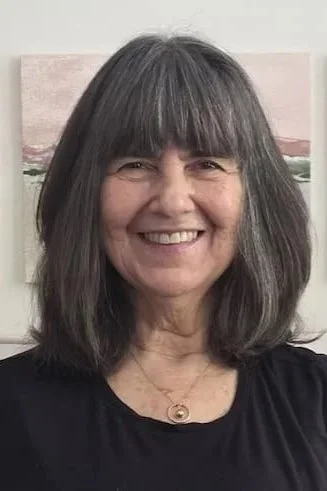
Lucy Barbera, PhD, LCAT, is a Licensed Creative Arts Therapist, whose clinical work spans the medical, psychiatric, and special education settings, as a Creative Arts Therapist, Art Teacher, and Special Education Principal. For over twenty years, Dr. Barbera has served on the faculty of The Humanistic Multicultural Education Graduate Program, at SUNY, New Paltz, where she developed and taught graduate and undergraduate courses in Expressive Arts Therapy and Expressive Arts Leadership & Social Justice.
Dr. Barbera is the Founder of the Trauma-Informed Creative Arts Therapy Certificate Program, at U Albany’s School of Social Welfare and an Associate Faculty Member of The Person-Centered Expressive Arts Therapy Program, founded by Dr. Natalie Rogers. Dr. Barbera lectures widely on the healing power of the arts, and curates exhibitions of patient/client expressive art, bringing awareness of the healing power of the arts to the community. Dr. Barbera maintains a private practice in Creative Arts Therapy, using a trauma-informed approach to the creative arts therapies.
Absolutely no prior art experience is necessary!
-
Join us in the way that works best for you. You may attend the Trauma-Informed Sandplay Certificate Program in person at the Creative Arts Therapy Studio in Kingston, NY, virtually via Zoom, or through a hybrid option that allows participants to mix in-person and virtual attendance across the six-day (Saturdays) program.
What people are saying
“I am hooked!! After so many years as a practicing clinician, it is amazing to have another tool in my practice. It is beyond meaningful to me.”
— Jennifer W.
“Lucy! Thank you for sharing your tremendous wealth of knowledge, experience, and expressive playfulness with us. Your workshops make me feel buoyant, even across the Zoom screen!”
— NW C.
“I appreciate the mix of theory, case study observations, and hands-on explorations, and you managed the dance between your "virtual" students and the group in the studio beautifully. You are a remarkable and generous teacher.”
— J.M.G.
“The Trauma-Informed Sandplay Therapy Program was the best workshop I've participated in. Your hands-on, experiential & therapeutic approach was great for learning & applying. ”
— Kini B.
Past Events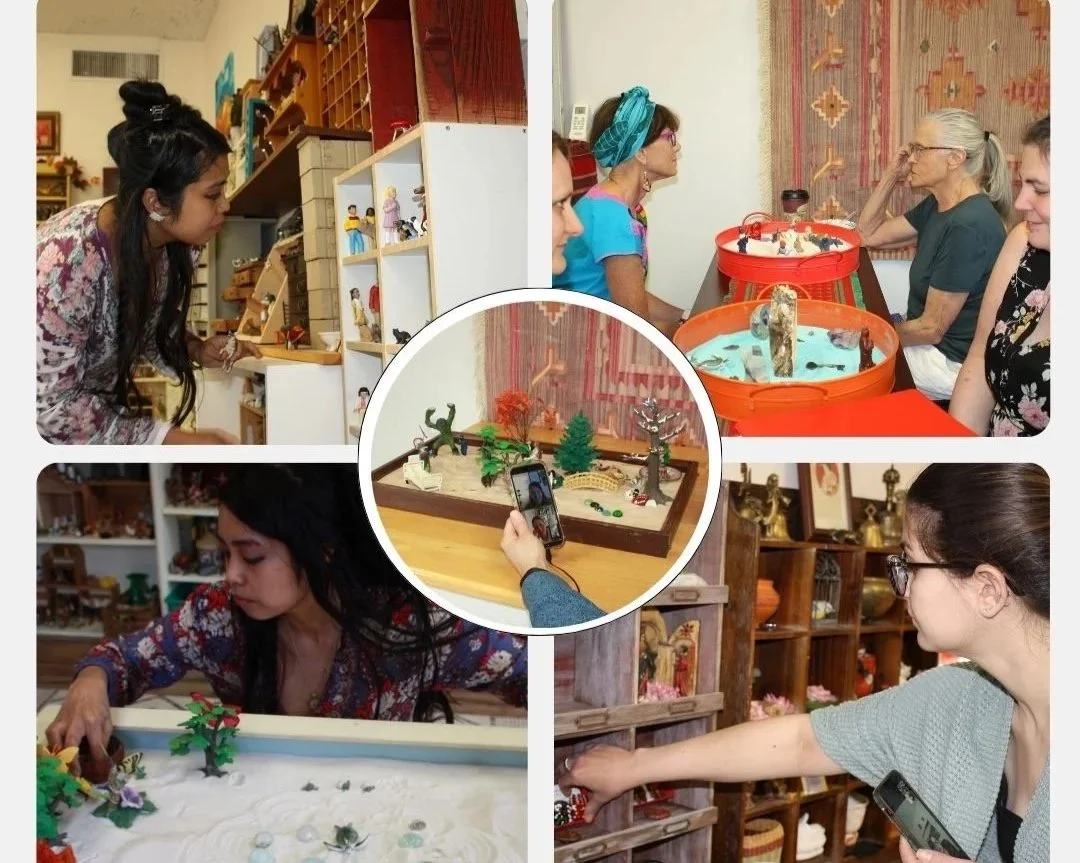
Certificate Program Features
30 Hours of Live Training
Hybrid Attendance: Join In Person in Kingston, NY, or Live Online via Zoom
Interactive demonstrations and experiential exercises
Comprehensive case studies
Practical tools you can begin using immediately
Certificate of Completion
One make-up session included for participants who miss a training day due to an emergency or prior commitment
This dynamic program emphasizes experiential learning, allowing participants to move beyond theory through live demonstrations, supervised practice, reflection, and discussion. By the conclusion of the training, participants will have the confidence to thoughtfully incorporate Trauma-Informed Sandplay Therapy into assessment, treatment planning, and ongoing clinical work.
Whether you are new to Sandplay Therapy or looking to deepen your trauma-informed clinical practice, this certificate program offers an inspiring opportunity to develop practical skills that can transform the therapeutic process and foster profound healing for clients of all ages.