Trauma-Informed Creative Arts Therapy
Certificate Program
The Summit sponsored TRAUMA-INFORMED Creative Arts Therapy Certificate Program is open to mental health professionals and educators who want to understand the neuroscience of trauma and the vital role the creative arts therapies play in the treatment of trauma.
WHEN: April 3 & 17, May 1 & 15 and June 5 & 19, 2027
10am - 5pm EASTERN TIME
COST: $1,197
LOCATION: Creative Arts Therapy Studio in Kingston, NY
& Virtually-Live-Online
What You Will Learn
This unique Certificate Program was designed to assist helping professionals in treating complex trauma, using a multi-modal creative arts approach for integration and healing. Counselors working with clients who have experienced trauma can find themselves feeling overwhelmed as they attempt to help regulate intense emotions or reach the client who is extremely withdrawn. The program provides helping professionals instruction on HOW to immediately apply creative methods, within the context of their practice with diverse populations and WHEN to utilize the Creative Arts Therapies when working with individuals and/or groups, using the following modalities: visual arts, creative writing, movement, music, and the dramatic arts, safely without re-traumatization, within the: “WINDOW OF TOLERANCE- WINDOW OF TIME-WINDOW OF RECONSOLIDATION"
Dr. Lucy Barbera
-
Attend in-person at the Creative Art Therapy Studio in Kingston, NY or attend virtually over Zoom. Sessions will run from 10am - 5pm EST each of the following Saturdays and take a 1 hour lunch break.
April 3
April 17
May 1
May 15
June 5
June 19 -
$1,197
Includes 30 hours certificate training & continuing education credits.
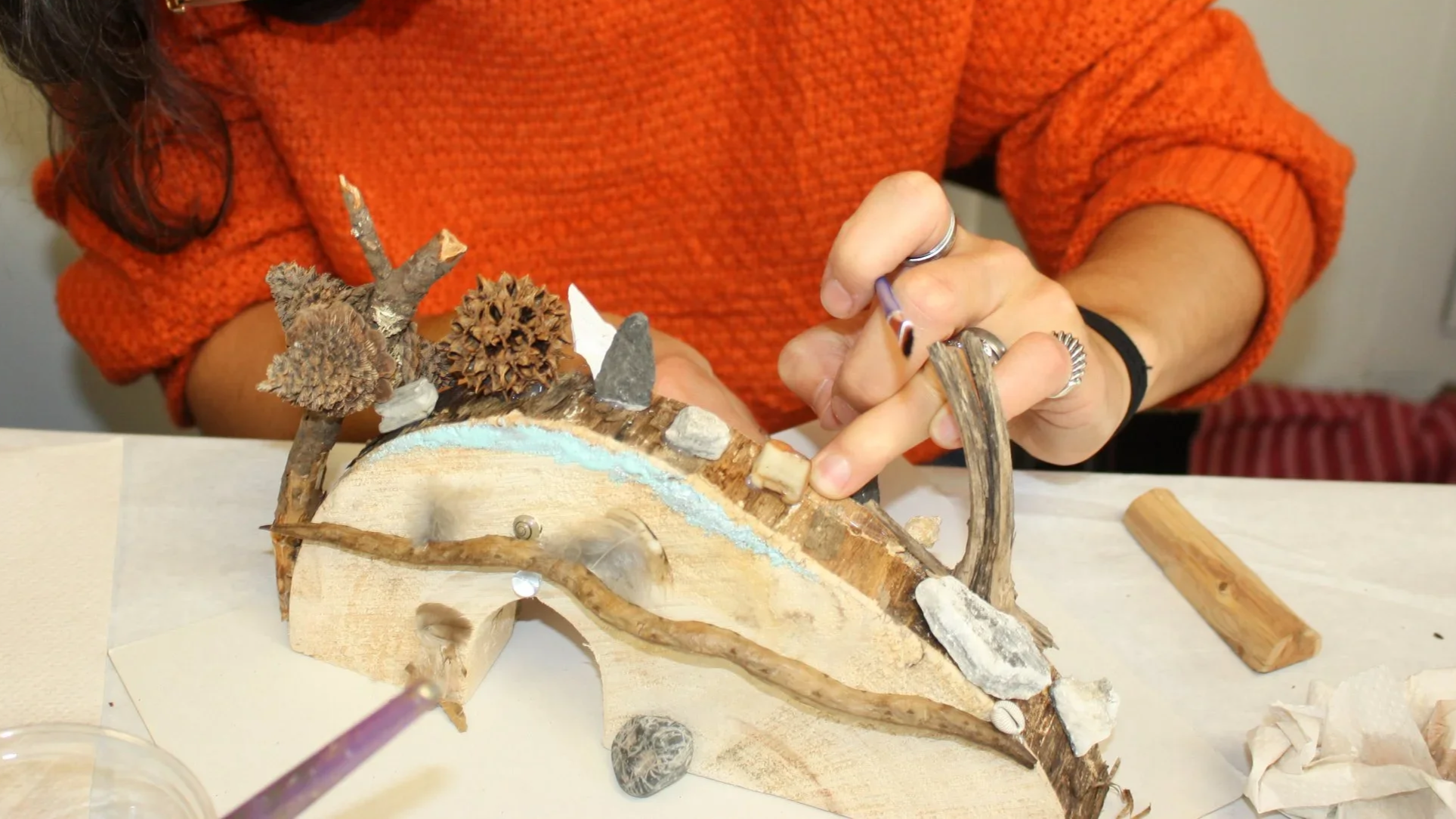
Optional wooden portal and key will be shipped to you for $20
-
COUNSELORS & MFT
Expressive Therapies Summit has been approved by NBCC as an Approved Continuing Education Provider, ACEP No. 7486. Programs that do not qualify for NBCC credit are clearly identified. Expressive Therapies Summit is solely responsible for all aspects of the programs.
✢ California Marriage and Family Therapists, Social Workers, Educational Psychologists and Professional Counselors- As of July 1, 2017, the State of California /Board of Behavioral Sciences [BBS] amended its regulations for continuing education providers to include National Board for Certified Counselors (NBCC) as a "board-recognized approval agency." If you are licensed as a marriage and family therapist, social worker, educational psychologist or professional clinical counselor in California, NBCC Approved Continuing Education Providers are recognized by the BBS to fulfill continuing education requirements. As of July 1, 2017, required CE hours can be accumulated entirely through self-study and distance learning.
ART THERAPISTS
✢ According to the Art Therapy Credentials Board (ATCB), continuing education credits in art therapy and/or mental health earned through this event can be applied toward the continuing education requirement for maintaining the ATR-BC. It is the responsibility of the attendee to determine if a particular session fits within the ATCB content areas.ELIGIBLE CONTENT AREAS1. Psychological and Psychotherapeutic Theories and Practice 2. Art Therapy Assessment 3. Art Therapy Theory and Practice 4. Client Populations and Multicultural Competence 5. Art Therapy and Media 6. Professional Issues 7. Ethics For further information, click here.
NEW YORK STATE
SOCIAL WORKERS
Expressive Therapies Summit, SW CPE #0730 has received approval from the New York State Education Department's State Board for Social Work to offer continuing education to licensed social workers. The Department may subsequently notify the provider that a particular course or courses is/are not acceptable.
Instruction provided is to assist social workers in working with other professions; it does not authorize the social worker to engage in the practice of any other profession, except as allowed by the Education Law.
The following states will accept NY State SW credits. (click the state for reference)
Alabama, Connecticut, Georgia, Idaho, Illinois, Massachusetts, Michigan, Utah.
The following states may accept NY State SW credits, please check with your board to confirm.
Alaska, Arizona, Arkansas, California, Colorado, Delaware, Florida, Indiana, Iowa, Kansas, Kentucky, Louisiana, Maine, Minnesota, Mississippi, Missouri, Montana, Nebraska, Nevada, New Hampshire, New Mexico, North Carolina, North Dakota, Oklahoma, Oregon, Pennsylvania, Rhode Island, South Carolina, South Dakota, Tennessee, Texas, Vermont, Virginia, West Virginia, Wisconsin, Wyoming.
MENTAL HEALTH COUNSELORS
Expressive Therapies Summit is recognized by the New York State Education Department's State Board for Mental Health Practitioners as an approved provider of continuing education for licensed mental health counselors. #MHC-010262.
LICENSED CREATIVE ARTS THERAPISTS
Expressive Therapies Summit is recognized by the New York State Education Department's State Board for Mental Health Practitioners as an approved provider of continuing education for licensed creative arts therapists. #CAT-0105.
Art Therapists Please Note: These credits can only be applied to ATCB certification by those holding the LCAT credential.MARRIAGE AND FAMILY THERAPISTS
Expressive Therapies Summit isrecognized by the New York State Education Department's State Board for Mental Health Practitioners as an approved provider of continuing education for licensed marriage and family therapists#MFT-0110.
-
Learning Goals and Objectives
1. To learn by experiencing Trauma-Informed Creative Arts methods, tools, and materials, including but not limited to the visual, spoken, written, and performing arts, as prerequisite to use in clinical practice.
2. To Facilitate Person-Centered communication, listening, and speaking skills.
3. To develop methods-in-action and build a repertoire of Trauma-Informed Creative Arts methods and document ongoing application.
4. To describe four creative art therapy-oriented interventions that parallel the “Neuro-sequential Model”.
5. To identify four or more stages of development that can help clinician’s structure neuro-counseling interventions.
6. To name four benefits of using bilateral exercises in trauma-focused art therapy.
7. To learn four or more ways that the Expressive Therapies Continuum (ETC) can be used to structure treatment of clients with a history of trauma and Post-Traumatic Stress Disorder.
8. To list three or more ways that creative art therapy engages neurobiological functions to combat the effects of Trauma/PTSD on the brain.
9. To identify five art therapy interventions that can address emotional, cognitive, and relational needs of clients who have experienced trauma or are in a PTSD state.
10. To understand how brain-based research reinforces the use of creative art interventions for trauma.
11. To facilitate clinical interventions, including trauma-sensitive art therapy directives, to debrief and re-frame, that can be immediately implemented into therapy practice to help children, families, couples, and adults regulate their emotions and behaviors.
12. To understand ethical implications and clinical challenges of using the creative arts therapy in clinical practice in treating trauma/PTSD.
13. To learn strategies to help prevent Second-Hand Trauma, Vicarious Trauma, and Compassion Fatigue to prevent clinician burnout.
14. To learn how to determine their client’s “Window of Time, Tolerance, and Reconsolidation”, and match creative arts methods to client’s readiness for and level of clinical support appropriate.
15. To utilize Trauma-Informed Creative Art Therapy in assessment, diagnosis, and clinical treatment.
16. To utilize Trauma-Informed Creative Art Therapy modalities in tandem for in depth exploration and “Creative Connection”.
17. To design a Treatment Plan using creative arts for one or more clients.
18. To learn how to introduce the creative arts into clinical practice for treatment, including with “resistant” clients, challenging children, and families.
19. To understand the neurobiological implications to tailor creative art therapy with modification(s) for clients with dual diagnosis and for clients who are differently enabled.
20. To learn, through case study, how to leverage the efficacy of the creative arts through interfacing with Sandplay Therapy.
21. To learn methods for introducing and processing “Mask as Avatar” for people of different ages, including children, teens, and adults, elders.
22. To identify, examine, and address the impact of Collective, Cultural, and Intergenerational Trauma through the creative arts.
23. To learn how to debrief clients and help them find the meaning and healing messages, and determine possible next steps, through their creative expression(s).
24. To learn to implement Adverse Childhood Experiences and Mitigators Inventories in the context of designing intervention(s) with creative art interventions.
25. To design mitigation strategies using the creative art therapy continuum that addresses client Adverse Childhood Experiences (ACES).
26. To learn complex developmental trauma theory including type 1 & 2 traumas.
27. To learn identify and design creative art therapy interventions for complex and developmental trauma and which creative art modalities best serve as mitigators for each.
28. To learn theoretical basis of the Creative Art Therapy Continuum and its use in Treatment Plan development.
29. To understand why and how to safely and effectively help the client “titrate” and “pedulate” client trauma, using body-based creative modalities.
30. To understand the role of the creative arts in countering Anticipatory Trauma and Ambiguous Loss.
-
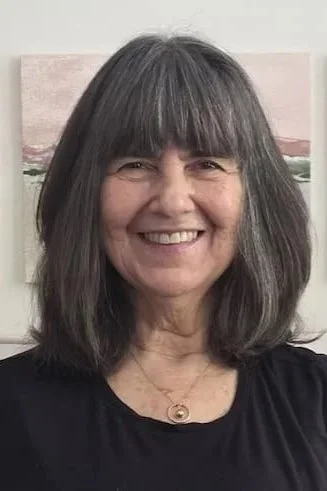
Lucy Barbera, PhD, LCAT, is a Licensed Creative Arts Therapist, whose clinical work spans the medical, psychiatric, and special education settings, as a Creative Arts Therapist, Art Teacher, and Special Education Principal. For over twenty years, Dr. Barbera has served on the faculty of The Humanistic Multicultural Education Graduate Program, at SUNY, New Paltz, where she developed and taught graduate and undergraduate courses in Expressive Arts Therapy and Expressive Arts Leadership & Social Justice.
Dr. Barbera is the Founder of the Trauma-Informed Creative Arts Therapy Certificate Program, at U Albany’s School of Social Welfare and an Associate Faculty Member of The Person-Centered Expressive Arts Therapy Program, founded by Dr. Natalie Rogers. Dr. Barbera lectures widely on the healing power of the arts, and curates exhibitions of patient/client expressive art, bringing awareness of the healing power of the arts to the community. Dr. Barbera maintains a private practice in Creative Arts Therapy, using a trauma-informed approach to the creative arts therapies.
Absolutely no prior art experience is necessary!
-
Join us in the way that works best for you. You may attend the Trauma-Informed Creative Arts Therapies Certificate Program in person at the Creative Arts Therapy Studio in Kingston, NY, virtually via Zoom, or through a hybrid option that allows participants to mix in-person and virtual attendance across the six-day (Saturdays) program.
What people are saying
“You should know how valuable the learning in your classes has been for me. I use it all the time — even virtually through the pandemic.”
— Lisa S.
“Each class is a wonderful experience that nurtures my spirit, while teaching me practical skills to use in my counseling practice. Lucy is a generous, knowledgeable, compassionate, and engaging instructor.”
— Nancy D.
“Hats off to Lucy! She does hybrid like a champ! We are lucky enough to live close and do in-person learning, but there were a few times we had to take advantage of online! Lucy is fantastic at making it engaging for all.”
— Kimberly P.
“I found everything I learned from the training to be extremely helpful with clients, and they love it!”
— I.A
Past Events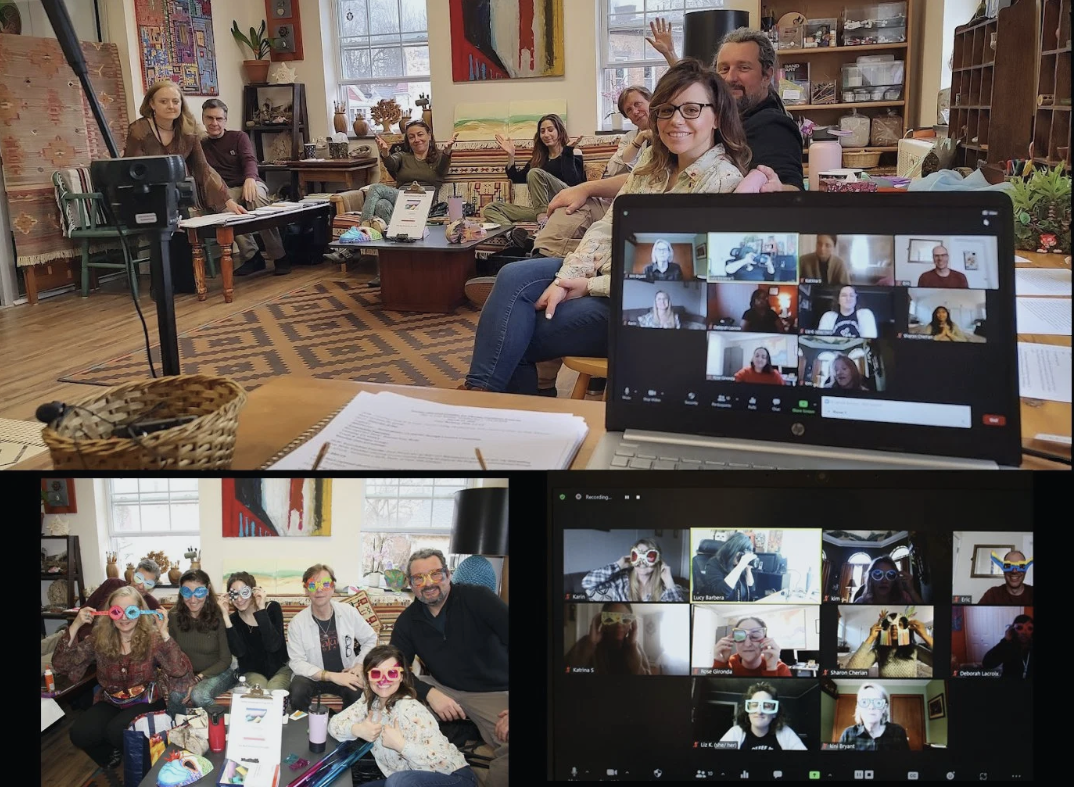
“Throughout the class, Dr. Barbera moved us from modality to modality, sensitively shifting us from interior work to intellectual work, solitary activities to small group and then large group involvement. Overall, Dr. Barbera led us through the “art of living”: through poetry, art-making, sharing abroad, holding secrets close, making beauty, and risking work which was very personal and perhaps not seen as beautiful, pulling from within to being seen in the light of day. These experiences as a whole led us to a greater sense of self and of balance in the world. A model for patiently working with people who have experienced trauma.
Over the last few years as a music therapist and soon-to-be creative arts therapist, I have used art to support, listen to, and to see my patients more fully. To give them a container to hold their grief and to know that they are not alone. With the tools that I learned in the class, I feel more solid in accepting my means of practice using all of the arts, music, visual, movement, written, and life creativity, to create a coherent whole. I look forward to creating a private practice so that the creative work can be utilized more freely, with greater honor, and to expand the work that I have been doing in the fields of addiction and others.”